Rehma Yash Razzak, Recognized By Influential Women, Advances Trustworthy AI To Strengthen Human Decisions In Healthcare
KENNESAW, GA, UNITED STATES, October 22, 2026 /EINPresswire.com/ -- Academic Scheduling Coordinator at Kennesaw State
Press Release Disclaimer: This is a press release distributed through the XPR Media network. It has not been independently verified by our newsroom.
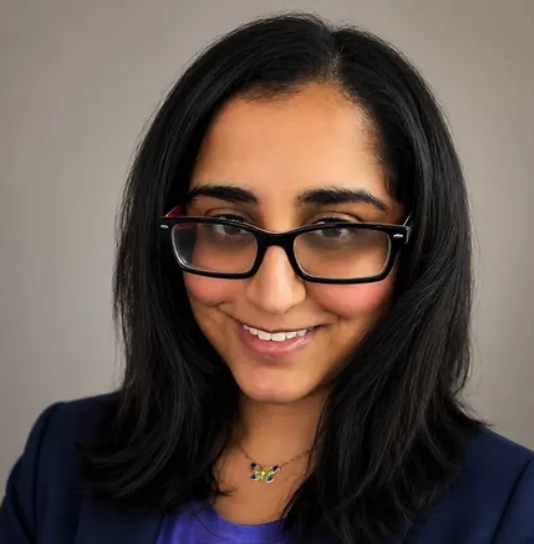

KENNESAW, GA, UNITED STATES, October 22, 2026 /EINPresswire.com/ — Academic Scheduling Coordinator at Kennesaw State University and Machine Learning Researcher Brings Rigor, Curiosity, and an Ethical Focus to AI, Data Analytics, and Digital Health
Kennesaw, Georgia – Rehma Yash Razzak is a machine learning researcher and data analytics professional whose work sits at the intersection of artificial intelligence, healthcare, and human-centered technology. She serves as an Academic Scheduling Coordinator at Kennesaw State University, where she also completed her graduate studies and research. With a background in computer science and advanced research, she specializes in machine learning robustness, multimodal AI, adversarial evaluation, and trustworthy healthcare technology. Her listed areas of expertise include machine learning, Python programming, data analysis, and data quality. Through her work, her advocacy, and her research, she is committed to advancing trustworthy AI and helping build a future in which technology serves people more effectively and inclusively.
Rehma entered the technology field in 2018 after building a strong foundation in computer science. She earned a bachelor’s degree in Computer Science from Southern Polytechnic State University and a master’s degree in Computer Science from Kennesaw State University. She has also completed certificates in AI Fluency: Framework and Foundations and Claude 101 from Anthropic. She is known for building reproducible data pipelines, designing machine learning solutions, and transforming complex biometric and behavioral data into insights that support research and clinical decision-making. Over the course of her career, she has contributed to work in digital health, virtual reality, human-computer interaction, and clinical AI.
As a Graduate Research Assistant at Kennesaw State University, Rehma led and supported projects focused on stress detection, attention assessment, Alzheimer’s disease, autism spectrum disorder, Parkinson’s disease screening, and AI-driven mental health applications. Her work has resulted in publications, presentations, and academic recognition, including membership in Sigma Xi, the scientific research honor society. She counts her first recognition as a graduate researcher in 2021 as a milestone moment, the point at which she began to see herself as part of the field she loves. She is recognized for her analytical rigor and interdisciplinary collaboration with researchers, clinicians, and engineers. Together with those colleagues, she has helped create technology designed to be both innovative and reliable in real-world settings.
Alongside her professional work in higher education, Rehma remains actively involved in machine learning research. In 2026, she presented “Stress-Testing Parkinson’s Disease Screening: A Cross-Modal Robustness Analysis of Drawing and Speech Models” at the 17th International Conference on Information, Intelligence, Systems & Applications (IISA 2026). The study examined how AI-based Parkinson’s disease screening models perform when exposed to real-world noise and adversarial conditions, contributing to ongoing efforts to develop more robust and trustworthy healthcare AI systems.
She also had a research poster accepted for presentation at the Women in Machine Learning (WiML) Workshop held in conjunction with NeurIPS 2026. The accepted work, “Emotion-Aware Risk Modeling and Safety Evaluation of a Support-Oriented Language Model for High-Risk Mental Health Text,” explores how language models respond to emotionally sensitive and potentially high-risk mental health content. The research evaluates risk assessment, emotional awareness, and response safety in AI systems and reflects her continued interest in trustworthy, human-centered artificial intelligence.
Beyond the technical side of her work, Rehma wants technology to make life more accessible and beneficial for diverse groups of people, particularly in healthcare and neurodivergent communities. Her outlook grows from a lifelong interest in how systems work, paired with a firm commitment to developing new technology responsibly and ethically. That combination of curiosity and conscience guides the questions she asks and the solutions she builds.
Rehma attributes her success to years of dedication to machine learning, data analytics, and trustworthy AI, combined with curiosity and a commitment to lifelong learning. Her work across machine learning robustness, multimodal AI, adversarial evaluation, AI safety, and healthcare technology has taught her the value of persistence, adaptability, and continually seeking better solutions. Outside of work, she enjoys photography, drawing, fantasy worlds, superhero films, and story-driven games. Favorites such as Marvel stories, The Lord of the Rings, Pixar films, and narrative role-playing games fuel her creativity and imagination, and creative stories that spark new ideas remain a steady source of inspiration.
The best career advice Rehma has received is that audiences come for substance rather than showmanship. People are looking for information, not performance, which means clarity and curiosity matter far more than being flawless. It is a principle that suits a researcher whose work depends on explaining complex findings to collaborators from many disciplines.
When asked what advice she would give young women entering her industry, Rehma admits the question is a tricky one because meaningful advice requires knowing someone’s story first. If pressed, she encourages them to know themselves better than anyone else does, even those closest to them, and not to let others talk them out of that self-knowledge. She also urges them not to fear stirring things up. Many people want stable fields and careers, she notes, but changing a workplace or career path means shaking things up a bit. The process will get messy, but in her experience it is usually worth it.
In a video interview with Influential Women, Rehma added that younger women do not need to hold on to the same dream forever. People grow and change, so goals set at 18 or 25 may not fit the person someone becomes, and that is perfectly acceptable. Every journey brings its own struggles, opportunities, and timelines, which is why universal advice is so difficult to give. Still, she encourages young women to permit themselves to evolve. If an original dream no longer matches who they are becoming, she explains, it does not mean they have failed. It means they are growing.
Rehma sees one of the biggest challenges in AI as keeping capability and human trust in balance. As models grow more powerful, public concern grows as well, and she considers that concern justified. AI can detect patterns across enormous volumes of data, but it cannot replicate human creativity, intuition, or lived experience. In healthcare especially, she believes AI should assist human judgment rather than replace it. The real opportunity, in her view, lies in building systems that strengthen human decisions, preserve people’s agency, and prioritize ethical, interpretable, and human-aligned innovation.
Several of Rehma’s specialties speak directly to that challenge. Machine learning robustness and adversarial evaluation focus on testing how models behave when data is noisy, unexpected, or deliberately challenging, so that weaknesses are found before they affect real decisions. Multimodal AI brings together different kinds of information, such as biometric signals and behavioral data, to build a fuller picture than any single source can provide. In healthcare settings, where the stakes for patients are high, these disciplines help ensure that AI tools are reliable enough to support clinicians rather than mislead them. Her emphasis on data quality and reproducible pipelines serves the same purpose, giving researchers results they can trust and repeat.
Enjoyment and curiosity in one’s work are among the values Rehma holds most dear. She believes people can achieve far more when they genuinely enjoy what they do. Stability matters, but without curiosity, she cautions, it can slide into numbness. Joy, curiosity, and passion at work are rarely discussed, yet they still matter because they guard against complacency and keep people growing. Whatever the circumstances, she encourages everyone to at least try to find curiosity and joy in their work.
Rehma’s view of influence is quiet and deeply personal. In her video interview, she explained that being influential does not have to mean taking charge of a room or being its loudest voice. She has always been more of a behind-the-scenes person, quietly showing up, helping where she can, and supporting the growth of others, and she believes that approach is just as valid. During her first game jam as an undergraduate, she mentored a team of young women who were just learning the basics of game design. Later, in her master’s program, she guided a group of young men through mobile app development from the ground up, and when they graduated together, they surprised her with a gift card as a thank-you. Another student she mentored in Python data science later asked permission to cite her name in a dissertation.
Those moments were not public, yet they meant a great deal to her. She notes that people cross paths every day without much thought and that brief encounters can unexpectedly shape someone’s direction. Influence, in her view, does not always require visibility, and sometimes it is the quiet mark left on people that they carry long after the moment passes. Years later, former mentees have returned to tell her she made a difference in their journeys, which is why she urges others never to discount small acts of helping and simply being there. The most meaningful influence, she believes, often happens when someone is not trying to be influential at all.
Through her research, mentorship, and commitment to ethical innovation, Rehma has shown that meaningful leadership can be both rigorous and gentle. Her journey from her first recognition as a graduate researcher in 2021 to her work today shows how curiosity, persistence, and care can grow into real influence. By championing AI that strengthens rather than replaces human judgment, Rehma Yash Razzak is helping shape a future in which technology earns trust and serves people with care.
Learn More about Rehma Yash Razzak:
Through her Influential Women profile: https://influentialwomen.com/connect/rehma-razzak
Influential Women
Influential Women provides a platform where women from all backgrounds can connect, share their perspectives, and create content that empowers themselves and others. Through storytelling, thought leadership, and creative expression, Influential Women amplifies voices that inspire change.
Editorial Team
Influential Women
email us here
Legal Disclaimer:
EIN Presswire provides this news content “as is” without warranty of any kind. We do not accept any responsibility or liability
for the accuracy, content, images, videos, licenses, completeness, legality, or reliability of the information contained in this
article. If you have any complaints or copyright issues related to this article, kindly contact the author above.

Media gallery