White-Label Tuya and TTLock Smart Lock Manufacturing: Custom Mortise Engineering and CE/FCC Compliance
SHENZHEN, GUANGDONG, CHINA, November 27, 2026 /EINPresswire.com/ -- Successful white-label smart lock manufacturing
Press Release Disclaimer: This is a press release distributed through the XPR Media network. It has not been independently verified by our newsroom.
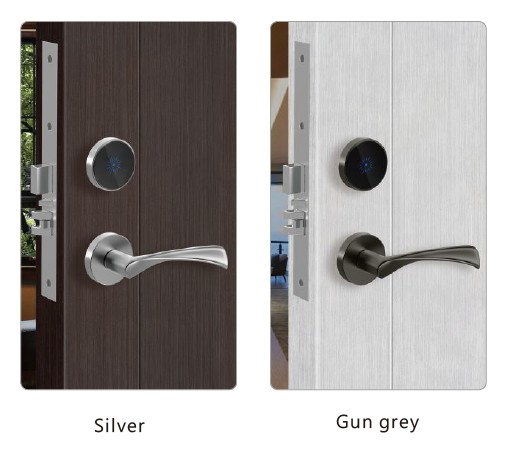

SHENZHEN, GUANGDONG, CHINA, November 27, 2026 /EINPresswire.com/ — Successful white-label smart lock manufacturing starts with a defined door assembly and an identified electronics configuration. For buyers sourcing from DIYU Smart, F7PRO, DQ1-M, and V1 illustrate three hardware approaches: a modular panel lock, a slim lock for narrow door profiles, and a replacement smart cylinder. Selecting between them requires matching the mechanical interface, radio module, platform configuration, and destination-market documentation.
Shenzhen Diyu Smart Co., Ltd. supplies smart locks and other AIoT products for contractors, integrators, and brand owners. Its published OEM scope includes branding, finishes, platform configuration, packaging, and project-dependent structural adaptation. These capabilities give buyers a basis for developing a branded product around an existing design or discussing a more substantial hardware change.
Choose the Hardware Format Before Customizing the Brand
The first decision is how much of the existing door hardware will be replaced. A panel lock, narrow-profile lock, and smart cylinder present different installation requirements, even when their listings reference the same app platforms.
F7PRO for Panel-Lock Projects
DIYU Smart lists the F7PRO panel at 281.5 × 65.5 × 22.5 mm, with Bluetooth, 2.4 GHz Wi-Fi, or RF433 module options selected when ordering. The listing references 5050/60/70 single-bolt mortise options and states that the mortise is sold separately.
For wholesale comparison, the quotation therefore needs to identify both the panel and the supplied lock body. The listed mortise codes should be supported by dimensioned drawings before an installer approves compatibility with existing door preparations.
DQ1-M for Narrow Door Profiles
The DQ1-M listing specifies a 127 × 30 mm front panel and a 315 × 50 × 20 mm rear panel. These dimensions make the model relevant to narrow-profile aluminum-door projects, but the wider rear panel also needs clearance.
DIYU Smart markets DQ1-M as an IP68 waterproof slim smart lock. For an outdoor specification, request the report identifying the tested components, mounting arrangement, immersion depth, and duration. The intended handle, gasket, and cable arrangement should match the configuration being evaluated.
V1 for Cylinder-Replacement Projects
DIYU Smart lists V1 as a smart cylinder with a default 60 mm cylinder length, local Bluetooth connectivity, and an optional Bluetooth gateway for remote access.
V1 offers a different starting point where the existing handle and lock case are intended to remain. Approval should use a cylinder drawing showing internal and external lengths relative to the fixing position, cam geometry, and knob clearance. A total-length figure alone cannot establish compatibility with every Euro-profile installation.
Define What Custom Mortise Engineering Must Change
Custom mortise lock engineering should begin with an interface drawing. A mortise is the lock case installed in a recess within the door; its fit depends on more than the visible panel dimensions.
The drawing should identify door thickness, backset, handle and cylinder centers, spindle dimensions, fixing positions, faceplate size, and strike geometry. Backset is the distance from the door edge to the relevant operating axis. Handing and the required locking action also need to be explicit.
DIYU Smart’s OEM guide lists lock-body adaptation, partial circuit-board adjustment, and mechanical-structure modification as possible customization categories. Project feasibility and tooling requirements should be confirmed for the proposed change.
A representative door sample can then reveal binding, incomplete bolt travel, cable interference, or handle-return problems that a logo sample cannot demonstrate.
Specify the Module, Platform, and Power Arrangement Together
A Tuya- and TTLock-compatible smart lock manufacturer should identify the electronics supplied in each order configuration. Platform compatibility does not establish that every radio option works with every firmware version.
For F7PRO, agree on the selected wireless module, firmware revision, app platform, and any required gateway. For DQ1-M and V1, confirm the corresponding combination separately. The approved bill of materials should record these choices so that repeat orders reproduce the same configuration.
Module integration also affects physical design. Antenna placement, nearby metal, cable routing, and battery access deserve evaluation in the assembled lock. Check communication with the door closed and the intended hardware installed. A private label Tuya smart lock or TTLock OEM door lock should be approved as a complete assembly, rather than through a module-only demonstration.
Review CE, FCC, and RoHS Against the Finished Configuration
Compliance documentation should follow the product being sold, including its radio variant and branding. CE marking, FCC authorization, and RoHS conformity address different requirements and need separate supporting evidence.
CE Marking and EU Responsibilities
For an EU radio lock, request the EU Declaration of Conformity and supporting assessment under the applicable Radio Equipment Directive requirements. The file should connect the marketed model to its hardware, firmware, labeling, and technical documentation.
Selling equipment under a buyer’s own name or trademark can bring manufacturer obligations under EU rules. Define responsibility for the declaration, technical file, traceability, and subsequent changes before launch. For internet-connected configurations, the assessment should also address applicable cybersecurity requirements.
FCC Authorization and Module Integration
For a US-bound radio configuration, obtain the relevant FCC ID and determine whether authorization covers the complete lock or an integrated transmitter module.
A certified module must be used within its authorization and integration conditions. Review the antenna, RF-exposure conditions, host labeling, user instructions, and remaining host-product requirements. Changing the enclosure or module arrangement should trigger a review of whether additional assessment or authorization is needed.
RoHS concerns restricted substances in electrical and electronic equipment. Its supporting material documentation should correspond to the supplied components and finishes. A product-page certification list cannot replace these configuration-specific records.
Move from OEM Sample to Controlled Production
An effective OEM process links the quotation, approved sample, and production specification. Appearance approval alone leaves the mechanical and electronic configuration insufficiently defined.
A practical sequence has four stages:
Define the product: Submit door drawings, destination markets, quantities, platform selection, finish references, and packaging requirements.
Confirm engineering scope: Separate branding changes from lock-body adaptation, PCB changes, and new tooling. Identify the associated validation work and costs.
Approve a representative sample: Evaluate fit, bolt movement, handle return, emergency access, battery replacement, and radio operation on the intended door arrangement.
Freeze the production configuration: Record drawings, component references, firmware, label artwork, and inspection criteria. Require review before substitutions or design changes.
Durability and environmental reports should identify the tested configuration and conditions. Buyers can then judge whether the evidence covers the intended duty, rather than extending one test result to every model.
FAQ
Does Tuya and TTLock compatibility mean one lock connects to both simultaneously?
No. A compatibility statement does not establish simultaneous operation. The order should identify the supported platform and firmware for each configuration. Any requirement to change platforms later should be demonstrated and documented separately.
Is a custom logo enough to define a white-label order?
A logo establishes only part of the product identity. The order also needs the hardware configuration, firmware, finish, accessories, packaging, labels, and supporting documents that will accompany the branded product.
Does a slim panel guarantee compatibility with a sliding door?
No. Panel width is one consideration. The selected locking mechanism, strike, door movement, handle projection, and mounting space must also suit the sliding-door assembly.
Can an existing FCC module approval cover a customized lock?
It may support the authorization approach when its conditions are satisfied. The finished lock still requires review for applicable host-product obligations, including labeling, emissions, and RF exposure.
Develop the Branded Configuration with DIYU Smart
For a white-label project, send DIYU Smart the door drawings, proposed F7PRO, DQ1-M, or V1 reference, target market, platform requirement, and expected quantities. Request a quotation separating standard hardware, customization, tooling, validation, and included accessories. Approve the assembled configuration and its supporting documents before releasing bulk production. Discuss project requirements through https://www.diyusmart.com/.
Diyu Smart
Diyu Smart
email us here
Legal Disclaimer:
EIN Presswire provides this news content “as is” without warranty of any kind. We do not accept any responsibility or liability
for the accuracy, content, images, videos, licenses, completeness, legality, or reliability of the information contained in this
article. If you have any complaints or copyright issues related to this article, kindly contact the author above.

Media gallery